What to Look For When Touring Flex Space: A Business Owner’s Guide
Reading the Space Before You Sign: Access, Height, and Power
A flex-space tour is not a formality. It is the single best chance you get to confirm that a unit will actually run your business before you commit to a lease, and the difference between a good walkthrough and a passive one usually comes down to knowing what to look at. The three items that shape almost everything else are how you get things in and out, how much vertical room you have, and whether the building can power what you plan to run.
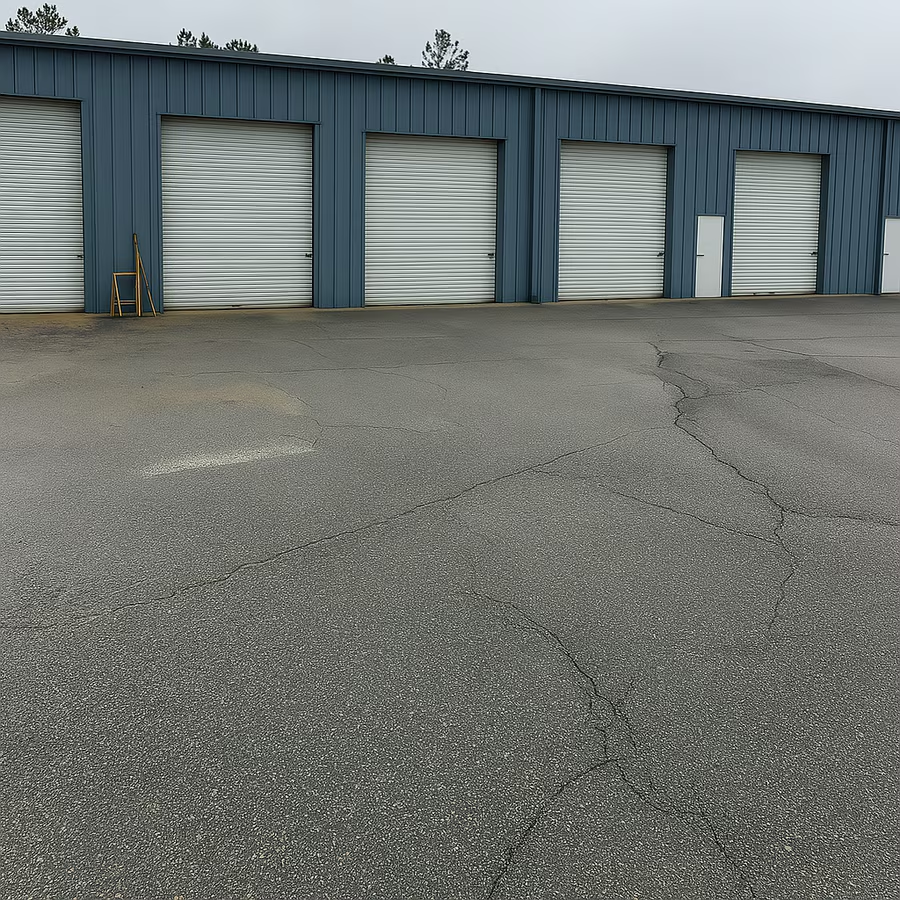
Start with loading and access, because it is the constraint most owners underestimate. Walk to the overhead door and look at its dimensions honestly against your largest recurring delivery. A door that comfortably clears a pallet jack is a different animal from one that has to swallow a box truck, and the two are not interchangeable. Ask whether the unit offers grade-level drive-in access or a dock, since a dock height that does not match your carrier's trailers can quietly cost you time on every shipment. Then step back into the drive aisle and picture the turn. Truck turning room and yard clearance matter as much as the door itself; a generous roll-up door is worth little if a delivery vehicle cannot square up to it. If your operation grows into larger freight, confirm the approach works for the trucks you will be running in two years, not just the vans you run today.
From there, look up and look at the panel. Ceiling clear height is the number that governs your racking, your equipment, and your ability to stack inventory rather than sprawl across the floor, so measure it against how you intend to use the vertical space rather than accepting the marketed figure. Power deserves the same scrutiny. Ask about available amperage and whether service is single-phase or three-phase, because heavier equipment, compressors, and certain machinery need three-phase power that a standard unit may not carry. While you are assessing power, note the warehouse lighting: whether it is adequate for detailed work, whether fixtures are efficient, and whether you will be adding your own. These are the questions that separate a space you can move into from one you will fight for months.
Comfort, Layout, and the Working Balance of the Unit
Once the hard infrastructure checks out, the tour should shift to how the space actually feels to work in day to day, because a unit can have perfect loading and still be wrong for your team. This is where climate, layout, and the split between office and warehouse come into focus, and where a thoughtful owner asks questions that a rushed one skips.
Climate control in the warehouse is a frequent blind spot. Many flex buildings condition the office generously and leave the warehouse to fend for itself, which is fine for pure storage and a problem for anyone with staff working back there through a Georgia summer or an Ohio winter. Ask directly how the warehouse is heated and whether any cooling is provided, and think about the temperature sensitivity of both your people and your inventory. A space that swings thirty degrees with the seasons will shape your labor, your equipment, and sometimes your product in ways that are easy to ignore on a mild tour day and expensive to discover later.
The office-to-warehouse ratio is the other balance point, and it is deeply personal to your operation. A professional-services tenant with a large team and modest storage wants a very different split from a distributor who needs mostly open floor and a small front office. Walk the office portion and judge whether the layout supports how your team works, whether there is room for the desks and meeting space you actually need, and whether restrooms are present, functional, and sized for your headcount. Then walk the warehouse and study the usable floor. Column spacing determines how freely you can lay out racking and move equipment, so note where the columns fall and whether they interrupt the paths your workflow depends on. A large square-footage figure means less than a floor plate you can actually use, and a tour is where you learn the difference.
Location, Parking, and Getting In and Out
The unit itself is only half of what you are leasing. The other half is where it sits and how easily your people, your customers, and your freight can reach it, and this is worth evaluating with the same rigor you bring to the roll-up door.
Begin with the logistics of the site. Interstate access shapes your transportation costs and your delivery reliability, so note how quickly you can get from the unit to a major highway and whether that route holds up during business hours rather than at the quiet moment of your tour. For businesses that move people or time-sensitive goods, proximity to an airport can matter as much as highway access. Drive the final approach yourself if you can, because the last mile into an industrial park tells you more about daily reality than a map ever will.
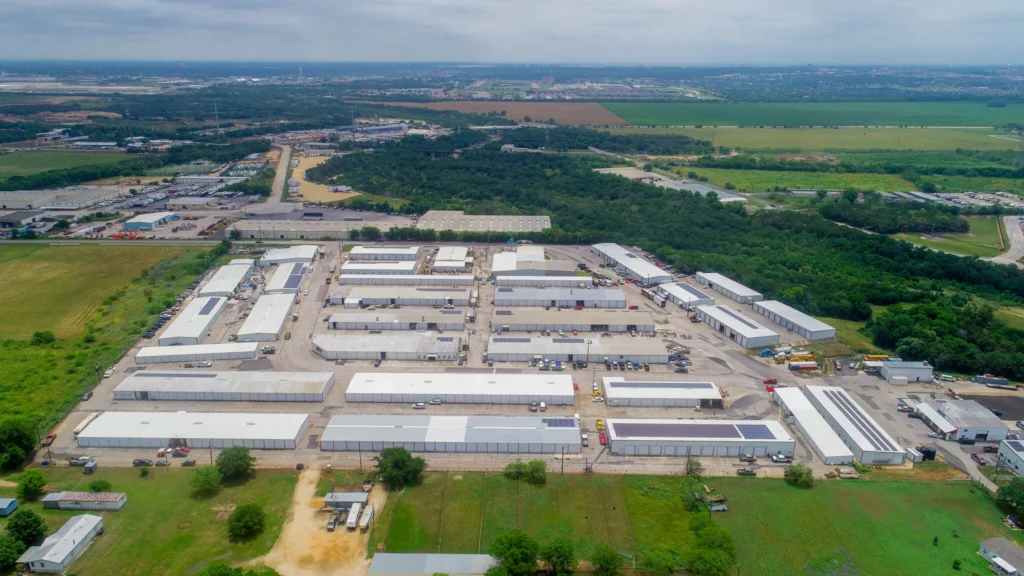
Parking is the detail that generates the most friction once you are operating, and it is easy to misjudge when a lot sits empty during a midday walkthrough. Count the spaces against your real headcount plus the customers and vendors who show up on a normal day, and ask how parking is allocated across the property so you are not competing with neighboring tenants for room. While you are outside, look at the overall condition and professional image of the park, since the impression it makes is the impression your clients form of you the moment they arrive. Finally, and this is the item owners most often overlook, confirm that your specific business is a permitted use for the unit. Zoning and use restrictions vary, and a space that suits your operation physically can still be off-limits for what you actually do, so verify permitted uses in writing before you fall in love with the floor plan.
Lease Terms and Room to Grow
The last thing to evaluate on a tour is not physical at all. It is the shape of the deal and how well it accommodates a business that will not stand still. The best-configured unit in the region is a poor fit if the lease locks you into terms that fight your growth, so treat the commercial conversation as part of the walkthrough rather than an afterthought.
Ask about term length and flexibility. A young or fast-moving business often values the ability to start with a term that matches its visibility rather than committing to the longest lease on offer, and it is worth understanding early what the landlord's posture is on renewals, extensions, and expansion. The single most valuable question here is whether you can grow within the property. A park that can offer you a larger unit or an adjacent bay when you outgrow your first space saves you the disruption and cost of relocating your entire operation across town, and that optionality has real value even if you never use it. Understand how escalations, common-area responsibilities, and any pass-through costs are structured, so the number you underwrite today is the number you actually live with. Good questions on a tour surface these terms while you still have leverage, rather than after you have signed.
Growing With Forward Business Park
Forward Business Park builds flex space for exactly this kind of scrutiny, because we would rather you tour with hard questions than sign with soft assumptions. Our units are designed to adapt as your business does, with flexible lease terms that let you match your commitment to where you are today and room to right-size as you grow rather than forcing a relocation the moment you outgrow the floor. That combination of loading access, usable height, warehouse comfort, and a workable office split is meant to fit a real operation, not just show well on a walkthrough.
Just as important is the standard we hold across markets. With properties in Georgia, Texas, Ohio, Michigan, Illinois, New York, Missouri, Alabama, and Arkansas, tenants get the same professional image and the same operating discipline whether they are opening a first location or expanding into a new region, backed by a team that understands what small and mid-sized businesses actually need from their space. When you are ready to see how a unit measures up to your operation, we invite you to tour a Forward Business Park flex space and bring every question on this list. The right space should welcome the scrutiny, and ours is built to.