Flex Space vs. Self-Storage for Your Business: Which Is Right?
Where Most Small Businesses Begin
Almost every growing business starts small, and for a lot of them, the first "commercial space" isn't commercial space at all—it's a self-storage unit. It makes sense. When you're bootstrapping an e-commerce brand out of your garage, running a contracting business from your truck, or stockpiling inventory faster than your spare bedroom can hold it, a storage unit is the obvious first step. It's cheap, it's available on short notice, and you can usually sign month-to-month without a long commitment or a credit review. For pure overflow storage, self-storage is genuinely a good tool, and there's no shame in using it. Plenty of successful companies passed through a storage unit on their way up.
The trouble starts when the business outgrows what a storage unit was ever designed to do. A self-storage facility is built for one job: holding boxes and belongings securely until you need them. It is not built to be a place where a business actually operates. And as your company matures—hiring your first employee, taking client meetings, shipping product daily, building something instead of just storing it—the walls of that storage unit start to press in. What felt like a smart, lean decision at the start quietly becomes the thing holding you back.
Recognizing that moment is the whole point of this comparison. The question isn't whether self-storage or flex space is "better" in the abstract. It's which one fits the stage your business is actually in right now. If you're still in pure-storage mode, a unit may be exactly right. If you've started to operate—or you're about to—you've likely outgrown it, and the honest answer is that no storage facility will let you do what comes next.
What Self-Storage Does Well—And Where It Stops
Let's be fair to self-storage, because it earns its place. The economics are hard to beat for what it is: low monthly cost, no build-out, no utilities to set up, and the flexibility to walk away with thirty days' notice. If your need is seasonal inventory, archived records, equipment you use occasionally, or a buffer of stock that doesn't move every day, a storage unit is efficient and sensible. You're paying for square footage and security, and that's precisely what you get. For overflow and dormant storage, it remains the right tool, and we'd never tell you otherwise.
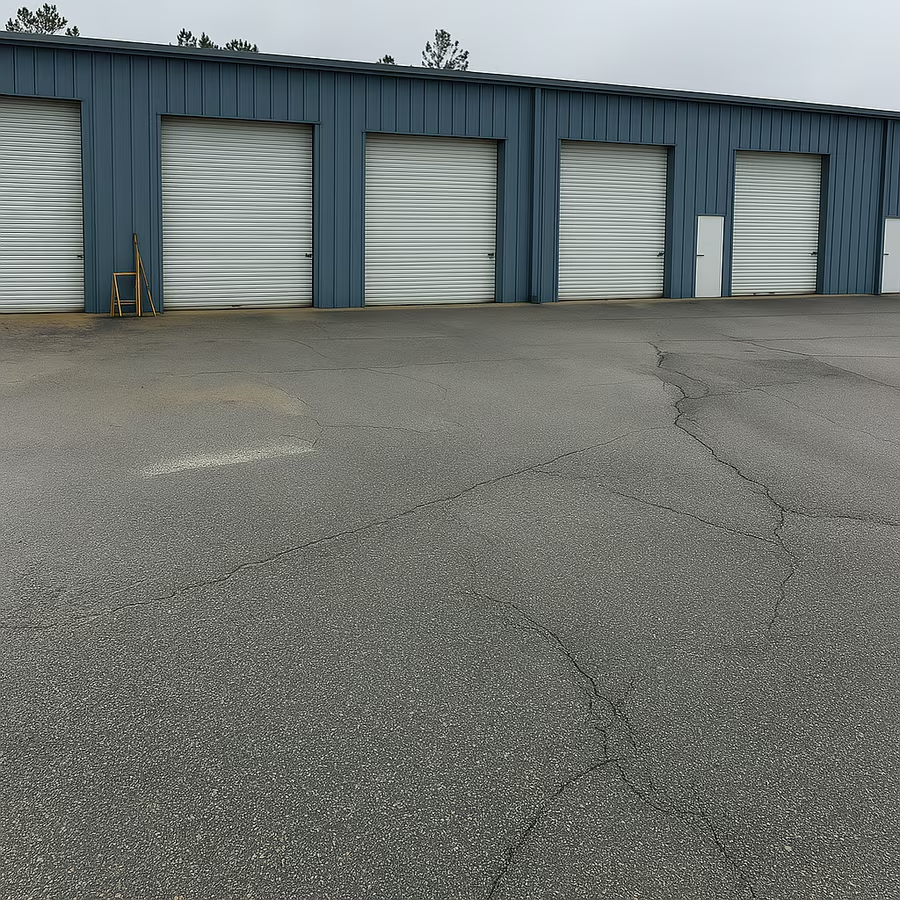
The limits show up the moment "storage" turns into "operations." Most self-storage facilities explicitly prohibit working or producing inside the unit—no assembling, manufacturing, packaging as a business activity, or running equipment. Access is often restricted to gate hours rather than around the clock, which doesn't work when a shipment has to go out at 6 a.m. or a job runs late. You generally can't have employees clocking in and working there, and you certainly can't host a client or a vendor in a corridor of roll-up doors. There's no real shipping and receiving infrastructure for a business that's moving freight in volume, no loading setup designed for daily throughput, and no way to run a professional operation out of a space that was leased to you as a locker.
Two constraints tend to sting the most as a business grows. First, you can't use a storage unit as your legal business address or the face you present to customers—it undercuts credibility on invoices, your website, and your paperwork. Second, there's no office component: no place to sit at a desk, take calls, keep records, and run the administrative side of the company. These aren't flaws in self-storage; they're simply outside its job description. But once your business needs them, the storage unit isn't a smaller version of what you need—it's a different thing entirely.
What Flex Space Unlocks
Commercial flex space is a different category built for a different purpose. In a single adaptable unit, it combines the elements a real operating business needs: a section you can finish as office and meeting space, and a warehouse or light-industrial area behind it where the actual work happens. Instead of choosing between "storage" and "office" and "shop," you get one footprint that flexes to hold all three, and you configure the mix around how your business actually runs rather than forcing your operation to fit inside a locker.
The practical difference is that a flex unit is a base of operations, not a parking spot for inventory. You can work there. You can build, assemble, and produce there, within the terms of your lease. You can have a team show up, clock in, and put in a full day. You can bring clients and vendors into a professional setting instead of meeting them at a coffee shop or apologizing for a storage corridor. You can set up genuine shipping and receiving for the volume a real business generates, and you can use the space as your business address—on your website, your invoices, your licensing, and your marketing—which quietly signals to everyone you deal with that you're an established company, not a side hustle run out of a unit.
That address point deserves emphasis, because it changes how the market sees you. A professional commercial location tells customers, lenders, and partners that you're here to stay. It supports the kind of trust that wins larger contracts and steadier relationships. Flex space also scales with you in a way storage never could: as headcount grows, as equipment comes in, as your product line expands, the space is designed to absorb that growth rather than force another move. The unit that was right when you were three people can still be right when you're a dozen, because it was built to operate, not just to hold.
Choosing Between Them—An Honest Framework
Here's the straightforward way to decide, without overcomplicating it. Choose self-storage if your need is genuinely storage and nothing more: you're warehousing inventory, records, or equipment; you don't need anyone working on-site; you don't require a business address there; you're not shipping and receiving in volume; and low cost with month-to-month flexibility matters more than the ability to operate. If that describes you, a storage unit is the disciplined, economical choice, and jumping to a larger commercial lease would mean paying for capabilities you don't yet use.
Choose flex space if your business has crossed—or is about to cross—into operating. The signals are consistent: you're tired of restricted access hours, you need employees working on-site, you want to meet clients somewhere professional, you're shipping and receiving enough that "storage" no longer covers it, you need an office alongside your warehouse, and you want a legitimate business address that reflects who you've become. When those needs stack up, you haven't outgrown your storage unit by a little—you've outgrown the category. Trying to run an operating business from a space that forbids operating is a friction you'll feel every single day, and it quietly caps how far you can grow.
The most common pattern we see is a business that started in self-storage because it was the right first step, then hit the ceiling of what a storage unit permits. That's not a mistake—it's a milestone. It means the company grew into something a locker was never meant to hold. Recognizing it early saves you from the slow drag of forcing an operating business into a storage-only space, and it lets you move into a footprint that supports the next stage instead of resisting it.
Growing With Forward Business Park
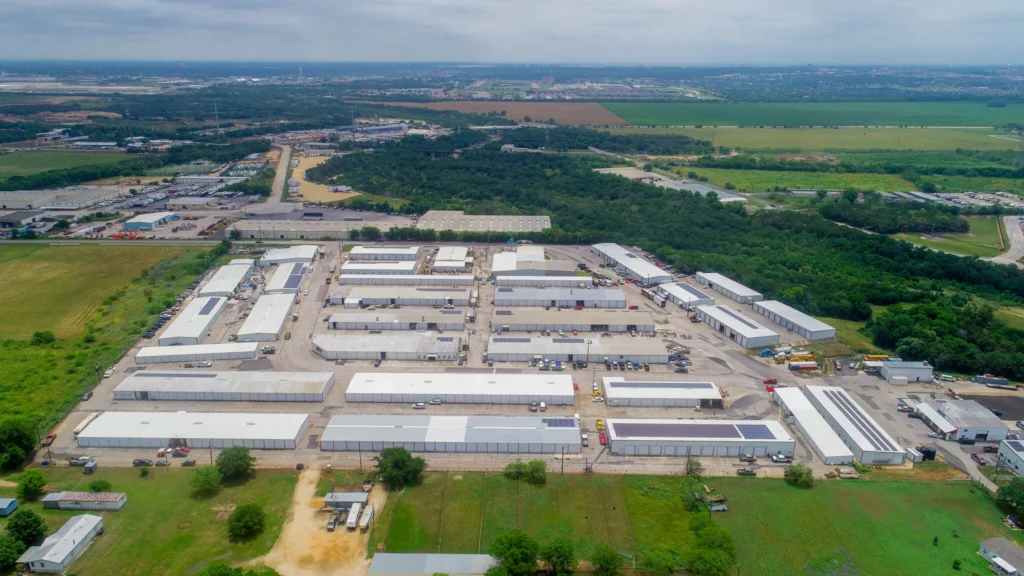
Forward Business Park exists for exactly this transition: the business that has outgrown a storage unit and needs a real commercial base to keep growing. Our flex space gives you flexible lease terms so you can commit on a timeline that matches your growth rather than gambling on a footprint you'll regret, and the ability to right-size your unit as your team, inventory, and equipment expand. You get a professional image—an office you can meet clients in, a warehouse where the work actually happens, and a business address that tells the market you're established. And because we operate across Georgia, Texas, Ohio, Michigan, Illinois, New York, Missouri, Alabama, and Arkansas, you're joining a community of growing businesses that made the same move, in markets built for companies on the way up. If your storage unit has started to feel like a ceiling, reach out to Forward Business Park and let's find the flex space that fits where your business is headed.