Flex Space for Fitness Studios, Gyms, and Training Businesses
Why Flex Space Fits Fitness Businesses Better Than Retail
When independent gym owners, strength-and-conditioning coaches, martial arts instructors, and studio operators go looking for space, most start their search in the retail market. It is an understandable instinct. Retail storefronts sit on busy corridors, come with signage visibility, and feel like the natural home for a customer-facing business. But retail space is priced for retail economics, and fitness businesses rarely need what that premium pays for. You are not selling impulse purchases to foot traffic walking past a window. You are drawing members who found you through referrals, class schedules, local search, and reputation, and who arrive with intent. That difference reshapes what kind of space actually serves you well.
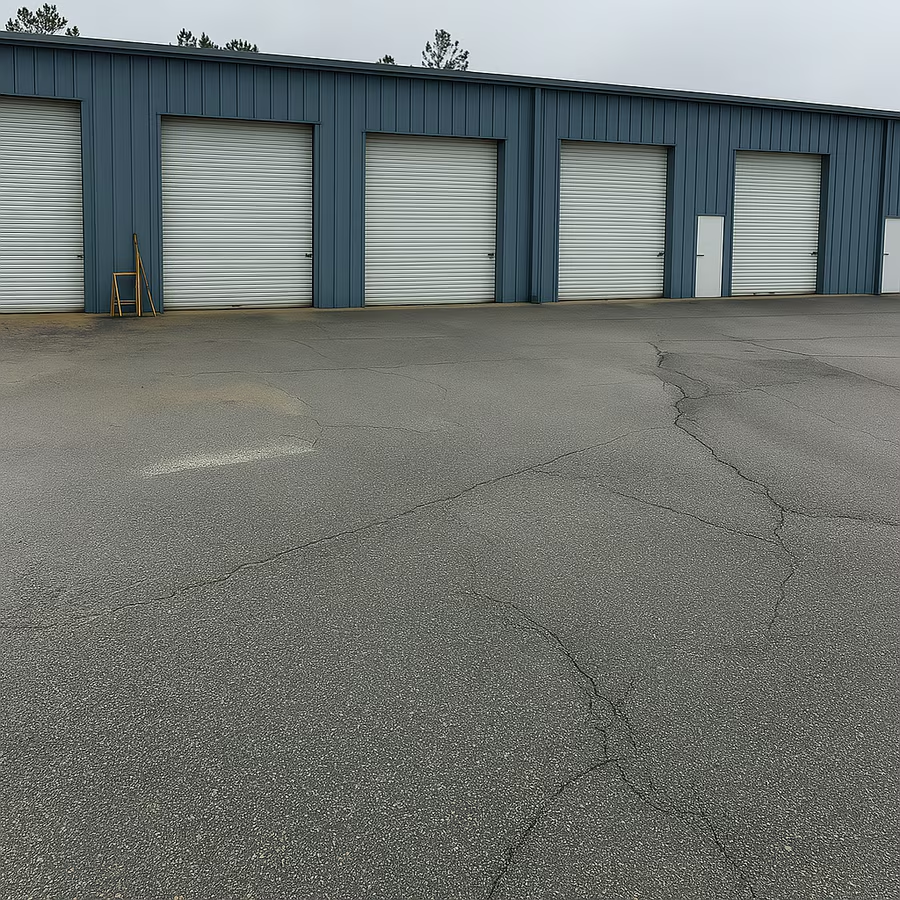
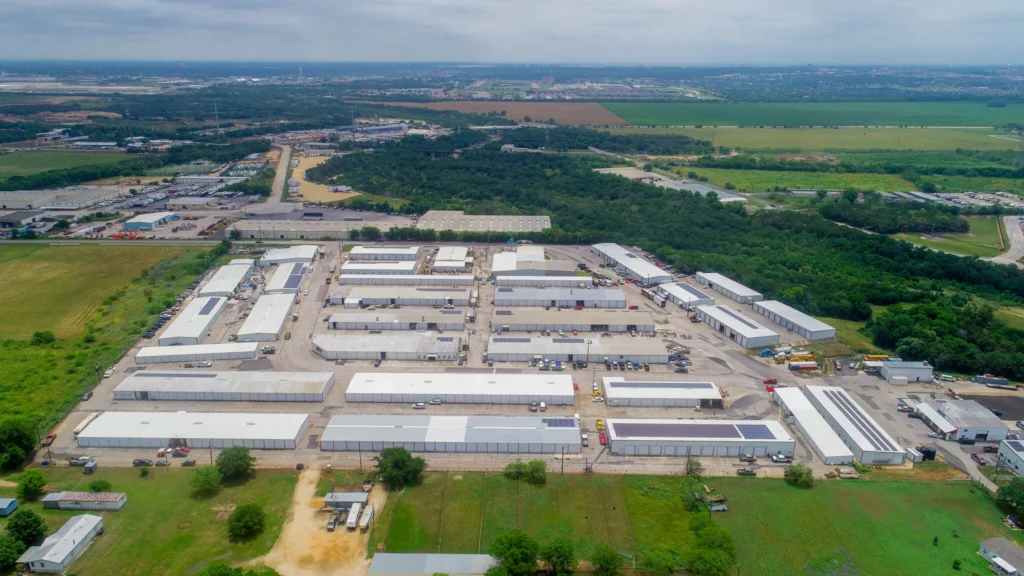
Flex space is built for exactly this kind of operation. The commercial flex model that Forward Business Park offers across its markets combines an open working area, clear ceiling height, roll-up or grade-level access, and a front reception or office zone in a single adaptable unit. For a fitness or training business, that combination maps almost directly onto how the space gets used. The open bay becomes your training floor. The office area becomes your check-in desk, retail nook, or consultation room. And because flex space is priced against light-industrial and warehouse benchmarks rather than prime retail, the same square footage typically costs meaningfully less. That is the core of the value proposition: the features that fitness businesses genuinely need, without the rent premium attached to features they do not.
The Open Floor, the Ceiling, and the Access You Actually Use
Almost every fitness discipline shares one requirement above all others: an open, uninterrupted floor. A CrossFit or strength box needs room to lay out rigs, platforms, and rowers without columns in the way. A martial arts or jiu-jitsu academy needs continuous matted area. A dance or movement studio needs sightlines and space to move across the room. A functional-training gym needs sled lanes and turf. Retail and traditional office layouts fight this need constantly, chopping the footprint into small rooms, load-bearing partitions, and low dropped ceilings. Flex space starts from the opposite premise. It is designed as a large, clear-span working area, which is why operators so often describe a good flex unit as a blank canvas. You bring the layout; the shell gets out of the way.
Ceiling height is the second feature fitness businesses undervalue until they lose it. Olympic lifting, rope climbs, wall balls, aerial and pole work, box jumps onto stacked platforms, and simply the feeling of an uncramped room all depend on clearance that standard retail bays cannot offer. The kind of open, high-clearance space that flex buildings provide is precisely the sort of environment that can suit these more demanding uses, which is why so many strength and functional-fitness operators gravitate toward industrial-style shells in the first place.
Then there is access. Roll-up or grade-level doors make it dramatically easier to move heavy equipment in during build-out and to swap or upgrade gear later without wrestling it through a narrow storefront entrance. That same access supports deliveries, seasonal reconfiguration, and the occasional large-format equipment that a growing gym inevitably acquires. Paired with the on-site parking that flex parks are planned around, it removes two of the most common friction points a fitness business faces: getting equipment in and getting members parked. That said, every building and municipality is different. Before you commit, confirm permitted uses, parking ratios, occupancy limits, and any required build-out with the Forward Business Park leasing team, because assembly and fitness uses can carry specific code and occupancy considerations that vary by location.
Affordability, Build-Out, and Making the Space Yours
The financial case for flex space over retail is straightforward, but it deserves to be spelled out because it changes what a new or growing fitness business can afford. Lower rent per square foot means you can lease a larger footprint for the same monthly cost, which for a gym translates directly into capacity, more members training at once, more class formats, more equipment stations. Alternatively, it means the same footprint at a lower monthly cost, preserving capital for the equipment, coaching, and marketing that actually grow the business. Either way, the operator keeps more room to invest where it drives revenue rather than sinking it into rent for visibility that a fitness business does not monetize the way a retailer does.
Making a flex unit yours does usually involve some build-out, and it is worth going in with clear eyes about that. A fitness fit-out commonly includes flooring appropriate to the discipline, whether rubber, turf, or matting, plus mirrors, a check-in and retail area, restrooms or showers, and sometimes reinforced anchoring or HVAC and ventilation upgrades for a room full of working bodies. Some of this may already exist in a given unit; some will need to be added. The permitting and code requirements for a fitness or assembly occupancy can differ from a general commercial or warehouse use, and requirements vary from market to market across Forward Business Park's footprint in Georgia, Texas, Ohio, Michigan, Illinois, New York, Missouri, Alabama, and Arkansas.
This is exactly why the conversation with the leasing team matters before you sign. Forward Business Park leases adaptable commercial space and does not guarantee that any specific use is permitted at any specific property; permitted use, allowable occupancy, parking, and build-out scope all need to be confirmed for the particular unit and jurisdiction you are considering. Walking in with a clear picture of your equipment, your expected member density, your parking needs, and your desired improvements lets the leasing team tell you quickly whether a given unit is a realistic fit and what it would take to get it ready. That upfront clarity protects your timeline and your budget far better than assumptions do.
Growing With Forward Business Park
The best space for a fitness business is the space that grows with it, and that is where the flex model earns its keep over the long run. A studio that opens with a single training floor and a handful of class formats often looks very different two years later, more members, more equipment, additional program lines, perhaps a small retail or supplement corner. Flexible lease terms let you match your commitment to your stage rather than overextending on day one, and the adaptable shell lets you reconfigure the interior as your programming evolves without moving the whole operation. You can right-size over time instead of guessing your five-year footprint before you have signed your first member.
Flex space also does more for your professional image than many operators expect. A clean, well-organized unit with a proper reception area, clear branding, and a purpose-built training floor reads as serious and established, the kind of place members trust with their memberships and their referrals. And because Forward Business Park operates across markets in Georgia, Texas, Ohio, Michigan, Illinois, New York, Missouri, Alabama, and Arkansas, an operator with ambitions beyond a single location has a consistent, familiar leasing partner to grow with as they expand into new communities.
If you run a gym, box, studio, or training business and you are weighing your next lease, it is worth looking past the retail storefront to what flex space can offer. Reach out to the Forward Business Park leasing team to talk through your space, parking, and build-out needs, and to confirm permitted uses and occupancy for the unit and market you have in mind. The right open, adaptable, well-located space can be the foundation your business grows on, and the conversation that gets you there starts with a call.