Small-Bay Warehouse Space: The Right Fit for Small Businesses
Every growing business eventually hits the same wall: the garage is full, the spare bedroom has become a stockroom, and the local self-storage unit is straining under inventory it was never meant to hold. But the leap from a makeshift setup to a traditional commercial lease can feel enormous. The listings that surface are almost always sized for established operations — twenty, thirty, fifty thousand square feet of warehouse with dock-high loading and multi-year commitments that assume a payroll and a logistics team you don't have yet. For the electrician, the online retailer, the specialty distributor, or the equipment-based service company, that math simply doesn't work. What these businesses need isn't more space than they can use. It's the right amount of space, in a professional setting, without the overhead of a facility built for someone ten times their size. That is precisely the gap small-bay warehouse space is built to fill, and it's the foundation of Forward Business Park's Small Bay Solutions approach.
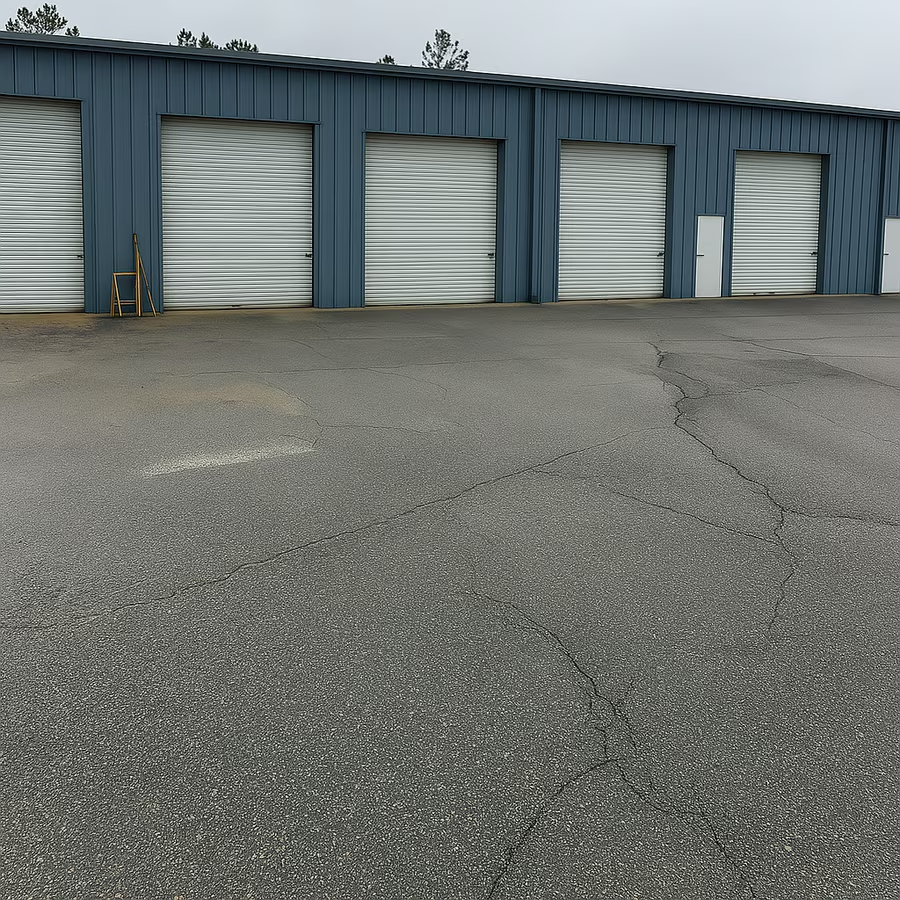
What Small-Bay Flex Space Actually Is Small-bay warehouse space is exactly what it sounds like: a compact, self-contained commercial unit that combines usable warehouse or shop area with a functional office or reception zone, all under one roof. It's a subset of what the industry calls flex space — a category defined by its adaptability. Rather than forcing a business to choose between a pure office suite and a bare industrial shell, a flex unit gives you both, in proportions that suit how you actually operate. A contractor can park a truck and store materials in the back while meeting clients up front. A distributor can receive, stage, and ship inventory while running the books from a desk a few steps away.
The "small-bay" distinction matters because it addresses scale. Traditional industrial product is leased in large blocks that assume high-volume operations. Small-bay flex breaks that model into right-sized increments — units modest enough that a business with a handful of employees can occupy one comfortably, without paying for square footage that sits empty. The result is a space that feels legitimate and looks professional to customers and vendors alike, but carries a footprint and a cost structure that a lean operation can actually sustain. It's the difference between renting a warehouse and renting the part of a warehouse you need.
Why It's Often the Ideal First Commercial Space For most small businesses, a small bay is the first real estate decision that feels like a genuine upgrade rather than a gamble. The appeal starts with affordability. Because you're leasing a right-sized footprint rather than an oversized block, the monthly cost stays proportional to what the business can support — freeing up capital for inventory, equipment, and hiring instead of sinking it into unused square footage. That financial discipline is exactly what an early-stage or growth-stage operation needs to stay healthy.
Beyond cost, a small bay confers something less tangible but just as valuable: professional standing. Having a real commercial address, a clean office to receive clients, and a secure space to run operations signals to customers, suppliers, and lenders that the business is serious and here to stay. It's a credibility upgrade that a home garage or a shared storage unit simply cannot provide. Deliveries arrive at a proper loading area. Inventory is organized and secure. Team members have a dedicated place to work. These are the operational foundations that let a business scale with confidence rather than improvise its way through growth.
Flexibility rounds out the picture. The businesses best suited to small bays are often the ones whose needs are still taking shape, and a flex unit accommodates that uncertainty gracefully. The same space that houses a workshop today can become a showroom, a fulfillment center, or a light-assembly line tomorrow, with minimal reconfiguration. That adaptability protects a business from outgrowing its space prematurely or locking into a layout that no longer fits — a real advantage when the trajectory ahead isn't fully mapped.
The Range of Businesses a Small Bay Serves The versatility of small-bay flex space is best understood by looking at who actually uses it. The skilled trades are a natural fit — electricians, plumbers, HVAC contractors, and landscapers who need secure storage for tools, materials, and vehicles, plus a modest office to manage scheduling, estimates, and dispatch. For these operators, a small bay functions as both a home base and a staging ground, ending the daily scramble of loading and unloading from a residential driveway.
E-commerce and distribution businesses represent another core segment. As an online seller outgrows a spare room, small-bay space provides the room to receive shipments, store and organize inventory, and pack and fulfill orders efficiently — all while keeping fixed costs low enough to preserve margins. Independent distributors and wholesalers benefit from the same combination of storage, staging, and office in one location. Service and equipment-based businesses — from mobile detailing outfits to specialty repair shops to companies that maintain a fleet of tools and machinery — find in a small bay the secure, functional space their operations demand. And a growing community of makers, fabricators, and light manufacturers use these units as workshops and micro-production facilities, where they can build, assemble, and ship without the burden of a full industrial lease.
What unites this diverse group is a shared profile: real operational needs, disciplined budgets, and a growth path that rewards flexibility over commitment. Small-bay flex space meets all three, which is why it has become the default home for the businesses that power local economies across the country.
Growing With Forward Business Park Forward Business Park built its Small Bay Solutions offering around a single conviction: that a small business should be able to start in exactly the space it needs and grow into more over time, without friction. Our small-bay flex units are designed to be a business's right-sized first move — professional enough to build credibility, affordable enough to protect cash flow, and adaptable enough to evolve as the operation does. When a tenant is ready for more room, more bays, or a different configuration, the goal is to make that next step as seamless as the first.
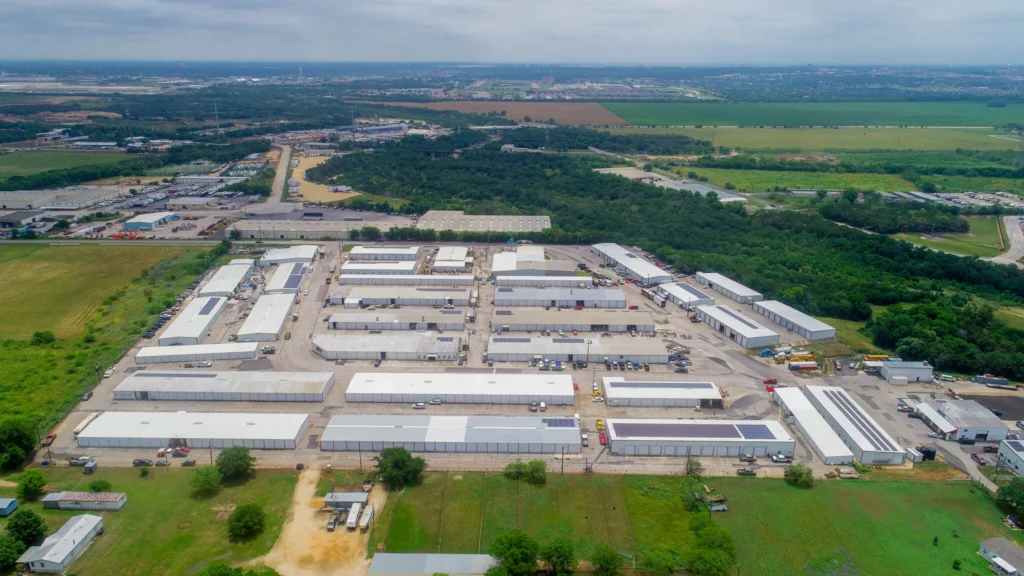
That philosophy travels. Forward Business Park operates flex and small-bay properties across a broad footprint — including Georgia, Texas, Missouri, Ohio, Michigan, Illinois, New York, Alabama, and Arkansas — so a business can find right-sized space in the markets where it actually works and lives. Wherever we operate, the approach is consistent: practical, well-located commercial space, flexible lease terms that respect where a business is in its journey, and a leasing team that understands the difference between selling square footage and helping a company grow. If you're weighing the move from a makeshift setup to your first real commercial space — or looking to right-size into something that fits better than what you have now — contact our leasing team to schedule a tour and see how a small bay can become the foundation for what you build next.