Flex Space & Warehouse for Lease in Douglasville, GA
Douglasville occupies one of the most strategically valuable positions in the Atlanta metro: directly on Interstate 20, roughly 20 miles west of downtown, with fast access to the entire metro market and the freight corridors running through West Georgia. For a growing business that needs room to actually operate — not just a desk, but space to hold inventory, run light production, house equipment, and still meet clients in a professional setting — Douglasville offers something that's increasingly hard to find closer to the urban core: affordable, adaptable commercial space in a location that keeps you connected to everything. That's exactly what Forward Business Park provides here.
Why Douglasville Is a Smart Base for a Growing Business Location economics are the first reason businesses choose Douglasville. Space intown or inside the perimeter commands a steep premium, and much of it forces you into a rigid choice between expensive office square footage or bare warehouse with no professional face. Douglasville lets you have both, at a cost structure that leaves capital for the parts of your business that actually generate revenue. Sitting on the I-20 corridor, you're minutes from Fulton and Cobb counties, a straight shot into Atlanta, and well-positioned for Hartsfield-Jackson and the regional distribution routes that serve the Southeast. For a company serving metro Atlanta customers or moving goods through the region, that access is worth real money — and Douglasville delivers it without the intown price tag.
The math becomes clearer when you look at how commercial rents scale with proximity to the core. Every mile closer to downtown Atlanta adds a premium that a growing business ultimately pays for in reduced margin, not added value. A West Douglas County location on I-20 keeps you inside the same labor shed and the same customer base as an intown address, but the occupancy cost is a fraction of what you'd carry inside the perimeter. That difference is not abstract — it's the working capital that funds another hire, another truck, or another quarter of inventory. For a business trying to reinvest in itself rather than in its lease, geography is one of the highest-leverage decisions you'll make.
Access cuts in every direction from Douglasville, which is what makes it more than just a cheaper alternative. I-20 runs east straight into Atlanta and west toward Birmingham, tying you into the Southeast's primary freight artery. From Douglas County you can reach Hartsfield-Jackson — the busiest airport in the world for both passengers and, increasingly, air cargo — without fighting the congestion that defines an intown commute. If you're dispatching crews, running last-mile delivery, or coordinating with suppliers and customers spread across the metro, being able to get on and off the interstate quickly is a daily operational advantage, not a once-a-year convenience.
There's also a durability argument. West metro Atlanta has absorbed steady population and business growth as households and companies priced out of the core have moved outward along the interstates. That demographic tailwind supports the businesses that serve them — the contractors, distributors, and service companies that make up the backbone of a flex tenant base. Basing yourself here means basing yourself in a market that is growing into you, not away from you.
What Flex Space Actually Lets You Do Flex space combines office, warehouse, and light-industrial functionality in a single, adaptable unit — which is why it fits so many businesses that traditional commercial real estate serves poorly. A single Forward Business Park unit can operate as a professional front office for client meetings, a workshop or light-assembly area, secure storage for inventory and equipment, and a shipping-and-receiving hub, all at once. You stop paying for two separate locations, or contorting your operation to fit a space that was never designed for it. As your needs shift — more inventory this quarter, more office next year — the space flexes with you instead of forcing a disruptive move.
Consider what the alternative usually looks like. A business that outgrows its garage or spare-bedroom office typically faces two bad options: rent traditional office space and rent separate warehouse or storage somewhere else, or cram everything into whichever single-use space is cheapest and make it work. The first path means two leases, two commutes, two sets of overhead, and the constant friction of an operation split across town. The second means a plumber's inventory in a leased office closet, or a growing e-commerce brand running fulfillment out of a space with no loading access. Flex space exists precisely to eliminate that false choice — it puts the office, the storage, and the work under one roof, at one address, on one lease.
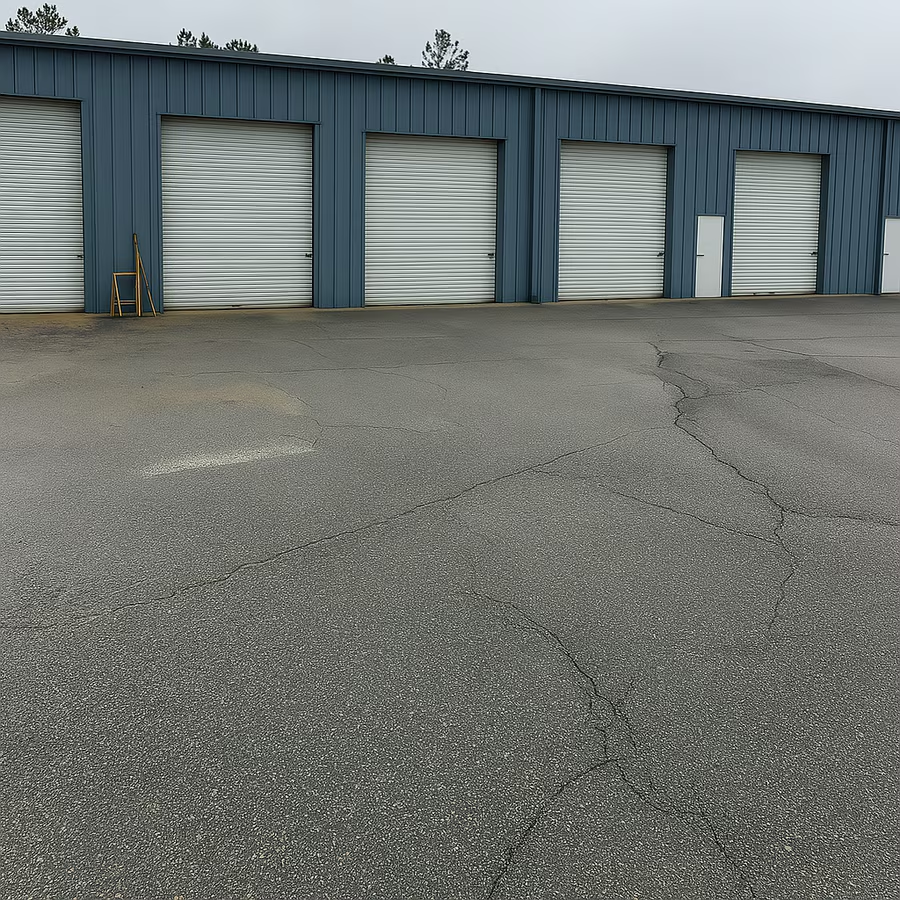
The practical layout is what makes it work day to day. The office portion gives you a clean, climate-controlled front where a customer, a vendor, or a job candidate can sit down and take you seriously. Behind it, the warehouse portion gives you clear-height space, a roll-up door, and room to receive materials, stage projects, or hold product. That combination means the person handling the books and the person handling the pallets are in the same building — which shortens communication, tightens quality control, and lets a small team wear multiple hats without wasting hours moving between sites.
Adaptability over time is the underrated benefit. Business needs are rarely static: a seasonal company might run heavy on inventory in one quarter and heavy on office activity in another; a growing firm might start with mostly storage and gradually build out its administrative side. A flex unit accommodates that shifting ratio without a renovation or a relocation. You're not locked into a floor plan someone else designed for a different tenant a decade ago — you're working in a space that's meant to be reconfigured as your business evolves.
Who Our Douglasville Space Is Built For The businesses that thrive in flex space share a common trait: they've outgrown a home garage or a too-small office, but they aren't ready for — and don't need — a purpose-built industrial facility. Contractors and trades use it as a base for crews, tools, and materials. E-commerce and distribution businesses use it to hold and ship inventory while running the operation from the same address. Service companies, light manufacturers, equipment-based businesses, and regional sales operations all find that a right-sized flex unit gives them the professional footing and the operational room to grow. If your business touches physical products, equipment, or a team that needs somewhere to work, Douglasville flex space likely fits.
For the trades, the value is immediate and tangible. An electrical, plumbing, HVAC, or landscaping company needs a place to park and load trucks in the morning, store tools and materials securely overnight, and give crews a real point of muster instead of a rotating set of parking lots. A flex unit on I-20 puts that base within quick reach of jobs across the metro, so crews aren't burning an hour of paid time crossing town before the first stop. The small office up front handles the estimating, scheduling, and permitting side of the business, while the shop in back holds the inventory and equipment that would otherwise be scattered between a home garage and a storage locker.
E-commerce and distribution operators face a different but equally common squeeze. As order volume grows, running fulfillment out of a house or a too-small unit stops being viable — you need receiving space, room to store product, and a door a delivery truck can actually back up to. A flex unit lets an online brand or a regional distributor hold inventory, pick and pack orders, and manage the business from a single professional address, with the shipping-and-receiving capability built in. It's the step between the spare bedroom and a full warehouse, and for most growing product businesses, it's the step they'll live in for years.
Beyond those two anchors, the tenant base is deliberately broad. Light manufacturers and assemblers use flex units for small-batch production that needs power, workbenches, and a roll-up door but not a heavy-industrial plant. Specialty service firms — printers, fabricators, repair shops, installers — use them to combine a customer-facing counter with a working shop. Regional sales and field-service teams use them as a metro-Atlanta beachhead, close to the interstate and to the customers they serve. What unites all of them is a need for space that does more than one job, in a location that keeps them connected to the whole market.
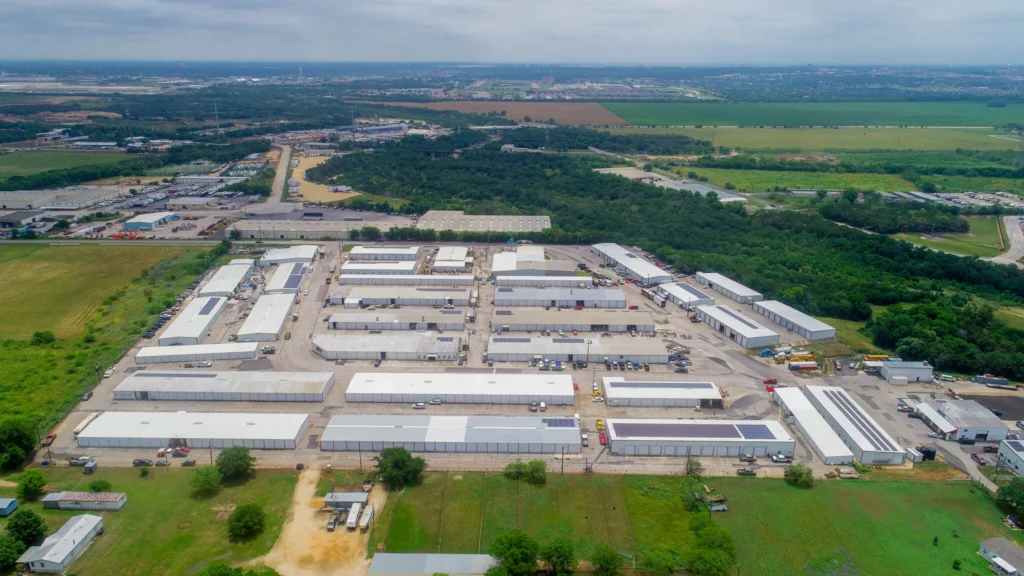
Growing With Forward Business Park The advantage of leasing in a business park rather than a standalone building is that you're not locked into a single decision forever. Forward Business Park offers lease terms designed around how real businesses grow, with the ability to right-size your footprint over time and a professional environment that gives clients confidence the moment they arrive. You're also part of a community of businesses — a source of referrals, shared standards, and the kind of stability that a scattered set of one-off spaces can't offer.
That right-sizing flexibility matters more than most tenants anticipate when they first sign. A standalone building forces an all-or-nothing bet: you either commit to more space than you need today and pay for the slack, or you take exactly what fits and face a costly, disruptive move the moment you grow. A business park gives you a path instead of a cliff. As your operation expands, you can move into a larger unit or add space within the same park — keeping your address, your routines, and your customer relationships intact while your footprint grows to match your business. That continuity has real value; every relocation costs downtime, signage, and the friction of teaching customers and vendors where to find you.
The professional environment does quiet work on your behalf, too. When a customer, a lender, or a prospective hire pulls into a well-kept business park and walks into a clean office front, it signals that yours is a serious, established operation — an impression that a cluttered garage or an anonymous unit in a rundown strip simply can't convey. In businesses where trust closes the deal, that first impression is part of your sales process whether you think about it or not. Being surrounded by other operating businesses adds a second, less obvious benefit: proximity generates referrals, informal knowledge-sharing, and a baseline of maintained standards that lifts every tenant.
Ultimately, choosing where to base your business is a bet on the next several years, not just the next lease term. Forward Business Park is built for the company that's past the garage and headed somewhere — a business that needs room to work, a professional face to show, a location that keeps it connected to metro Atlanta, and a landlord whose terms bend with its growth instead of against it. If that's where you are, Douglasville is a base worth serious consideration. If you're evaluating flex space or warehouse for lease in Douglasville, reach out to schedule a tour and see how the space fits what you're building.