Flex Space & Warehouse for Lease in Batavia, NY
Sitting Between Rochester and Buffalo, Batavia Punches Above Its Weight
Picture a growing business in western New York weighing where to plant its next location. The Rochester market pulls from one direction, Buffalo from the other, and the cost of committing to real estate in either metro keeps climbing. The instinct is to pick one and absorb the premium. The smarter move is often to find the point between them—the place that reaches both without paying full metro rent for the privilege. In western New York, that place is Batavia.
Batavia is the seat of Genesee County, positioned almost exactly midway between Rochester and Buffalo and sitting directly on Interstate 90, the New York State Thruway. That single stretch of highway is the artery of the region, and a business based in Batavia is on it, not near it. Drive time to either metro is short and predictable, which means a company can serve customers, suppliers, and job sites across both markets from one address without asking its people or its trucks to fight through cross-town congestion every day.
The character of the area reinforces the case. Genesee County has a long agricultural and light-industrial base, the kind of economy that runs on real work—fabrication, distribution, service, and trade. That foundation makes it a natural home for businesses that need functional space rather than a downtown showroom. And because Batavia isn't Rochester or Buffalo, the space costs less. For an operator watching every line of overhead, an affordable western-NY base with genuine reach into two metros is not a compromise. It's leverage.
Why Batavia Is a Smart Place to Set Up Shop
Location advantages only matter if a business can actually use them, and Batavia's geography is the kind that pays off daily. Being directly on I-90 means logistics aren't an afterthought. A distribution operation can push shipments toward Rochester in the morning and Buffalo in the afternoon. A contractor can bid work across both metros and reach every job site from a single yard. A service company can cover a territory that would otherwise require two offices, staffed and rented separately, and run it from one. The Thruway also opens routes toward the Canadian border, extending the practical reach of a Batavia base well beyond the immediate region.
There is also the matter of cost discipline. Space in the metros commands metro pricing, and for many small and mid-sized businesses that pricing is simply out of proportion to what the operation needs. Batavia lets a company right-size its real estate spend without surrendering access to the customers and labor those metros contain. The dollars saved on rent stay in the business, funding equipment, inventory, hiring, or the next stage of growth—the things that actually move a company forward.
Genesee County's established industrial and agricultural economy adds one more layer. A business setting up here lands among peers who understand what it takes to run a working operation. Suppliers, tradespeople, and adjacent businesses are already part of the fabric. That ecosystem shortens the ramp for a company opening a new location, because the support network it needs to operate is present rather than something it has to assemble from scratch.
What Flex Space Actually Lets You Do
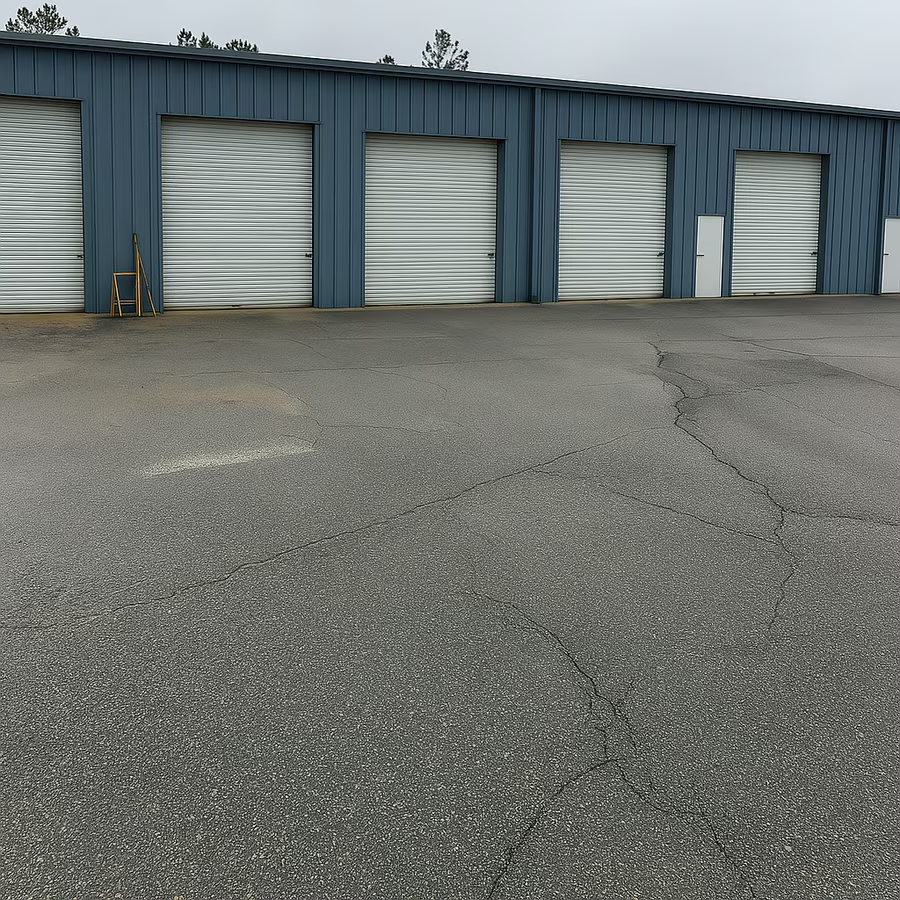
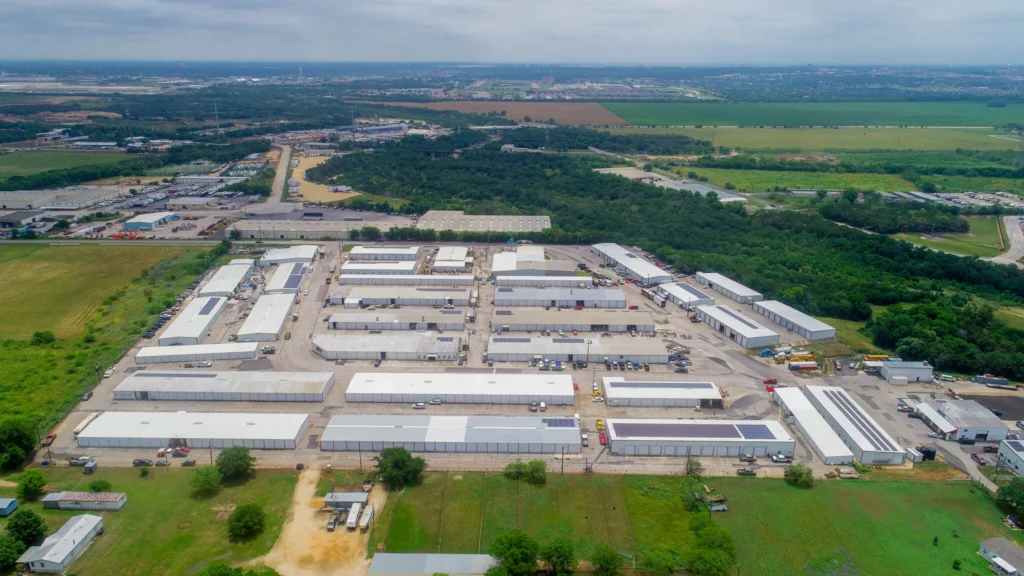
The reason Forward Business Park's Batavia property fits this market so well is the nature of the space itself. The building at 5773 E Main St offers up to roughly 31,000 square feet of office, industrial, warehouse, and flex space—and the operative word is flex. Flex space is a single adaptable unit that combines front office, warehouse, storage, and shipping under one roof. A visitor walks into a professional office. Behind it sits the warehouse where product is stored, work gets done, and trucks are loaded. It is one address doing the job that used to require two.
That consolidation is where the real economics live. Plenty of growing businesses find themselves stretched across a leased office in one place and a warehouse or storage unit in another—paying two rents, two utility bills, and losing hours each week shuttling people and inventory between them. Flex space collapses that arrangement into a single lease and a single location. The team that answers the phone is steps from the team that fills the order. Nothing is stranded across town. The savings show up in rent, in time, and in the simple efficiency of having the whole operation in one place.
Just as important, flex space grows with the business rather than boxing it in. A company can lease the footprint it needs today—more office and less warehouse, or the reverse—and reconfigure as the mix shifts. When the operation expands, the space is built to flex with it instead of forcing a disruptive move the moment things start working. That adaptability is exactly what a business between two growing metros needs: room to scale on its own timeline.
Who It's For, and Growing With Forward Business Park
The businesses that get the most out of flex space are the ones running real operations. Contractors and trades use it as a base for crews, equipment, and materials, close to job sites across both metros. E-commerce and distribution companies use the warehouse-and-shipping half to stock inventory and move orders, while the office half handles customer service and administration. Service companies consolidate dispatch, storage, and back office into one location. Light manufacturers get production, storage, and a professional front of house in a single adaptable footprint. If a business needs both a place to work and a place to store and ship, flex space was built for it.
Growing with Forward Business Park means more than signing a lease. It means flexible terms that fit where a business actually is, and the ability to right-size the space as the operation changes rather than committing to a footprint chosen for a version of the company that no longer exists. It means a professional image—a real address and a proper front office that customers, vendors, and job candidates take seriously—paired with the industrial capability behind it. And because Forward Business Park operates properties across Georgia, Texas, Ohio, Michigan, Illinois, New York, Missouri, Alabama, and Arkansas, a tenant is joining a network that spans markets, backed by an operator that understands what small and mid-sized businesses need to run and to grow.
For a company looking to establish an affordable western New York base with genuine reach into both Rochester and Buffalo, Batavia is a rare fit, and the flex space at 5773 E Main St is built to make the most of it. To learn more about availability, configurations, and terms at Forward Business Park in Batavia, reach out today and start the conversation about where your business goes next.