Flex Space for Landscaping and Lawn-Care Businesses: A Better Home Base for Your Fleet, Crews, and Materials
Why Landscaping Businesses Outgrow the Driveway
Nearly every landscaping and lawn-care operation starts the same way: a truck in the driveway, a trailer at the curb, and a garage packed with mowers, trimmers, and blowers. For a while, that works. But growth in the green industry is physical growth. Every new crew means another truck. Every new commercial contract means more equipment, more material, and more early mornings spent shuffling trailers so the neighbors do not complain. The home base that launched the business quietly becomes the thing holding it back.
The tipping point usually arrives in pieces. A rented storage yard on one side of town holds the mulch and hardscape pallets. A self-storage unit across the county holds the hand tools and irrigation supplies. The trucks live wherever there is room to park them, and the "office" is a phone and a clipboard on the front seat. Crews burn the first hour of every day driving between these scattered points before a single blade of grass gets cut. That lost hour, multiplied across a season and a growing roster, is real money left on the table.
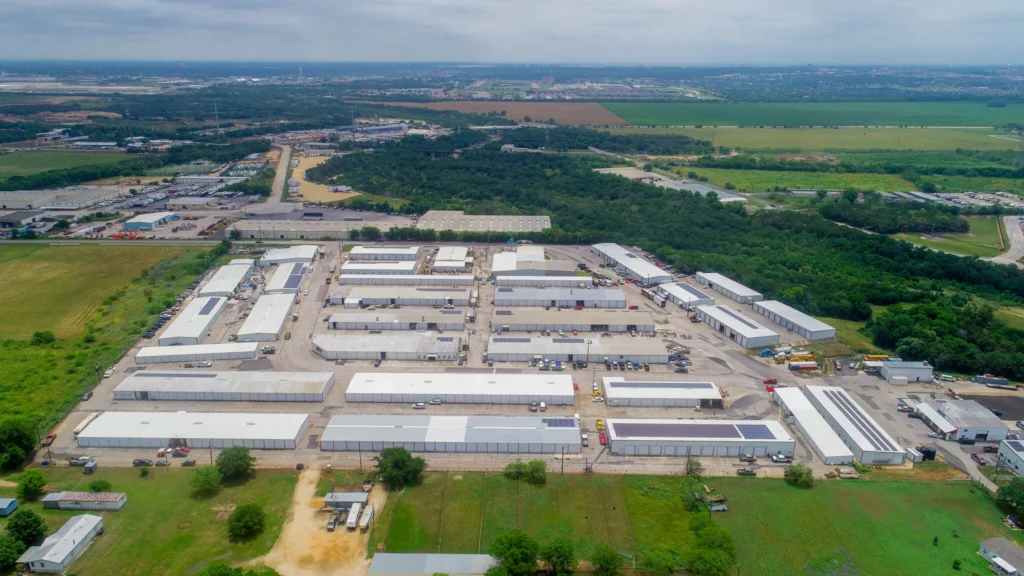
Flex space exists precisely for this stage of a business. A flex unit combines warehouse and light-industrial space with a finished office area under one roof, which maps almost perfectly onto what a landscaping company actually needs. Forward Business Park leases exactly this kind of adaptable space to small and mid-sized operators across Georgia, Texas, Ohio, Michigan, Illinois, New York, Missouri, Alabama, and Arkansas. The idea is simple: give a growing grounds business one base to operate from, instead of forcing it to stitch together a driveway, a rented lot, and a storage locker.
One Base for Trucks, Equipment, and Materials
The core problem flex space solves for a landscaping company is consolidation. When the fleet, the equipment, and the materials all live in one secured location, the entire morning routine changes. Crews arrive at a single point, load out, and roll. There is no cross-town relay, no waiting on a gate that opens at seven, no explaining to a landlord why there are three trailers in the yard again. The clock that matters — the one that starts when a crew reaches the first job — starts earlier and more reliably.
A flex unit gives a grounds business the physical range it needs. The warehouse portion provides secure, enclosed storage for mowers, trimmers, blowers, and the expensive hand equipment that walks away when it sits unattended in an open yard overnight. That same space handles bulk and bagged materials — mulch, soil, aggregate, hardscape pallets, irrigation parts, fertilizer — kept dry and organized rather than tarped in the weather. And because flex space is built for working operations rather than passive storage, there is room to actually stage the next day's jobs: pull the materials, load the trailers, and have crews walk into a base that is ready to go rather than a puzzle to solve.
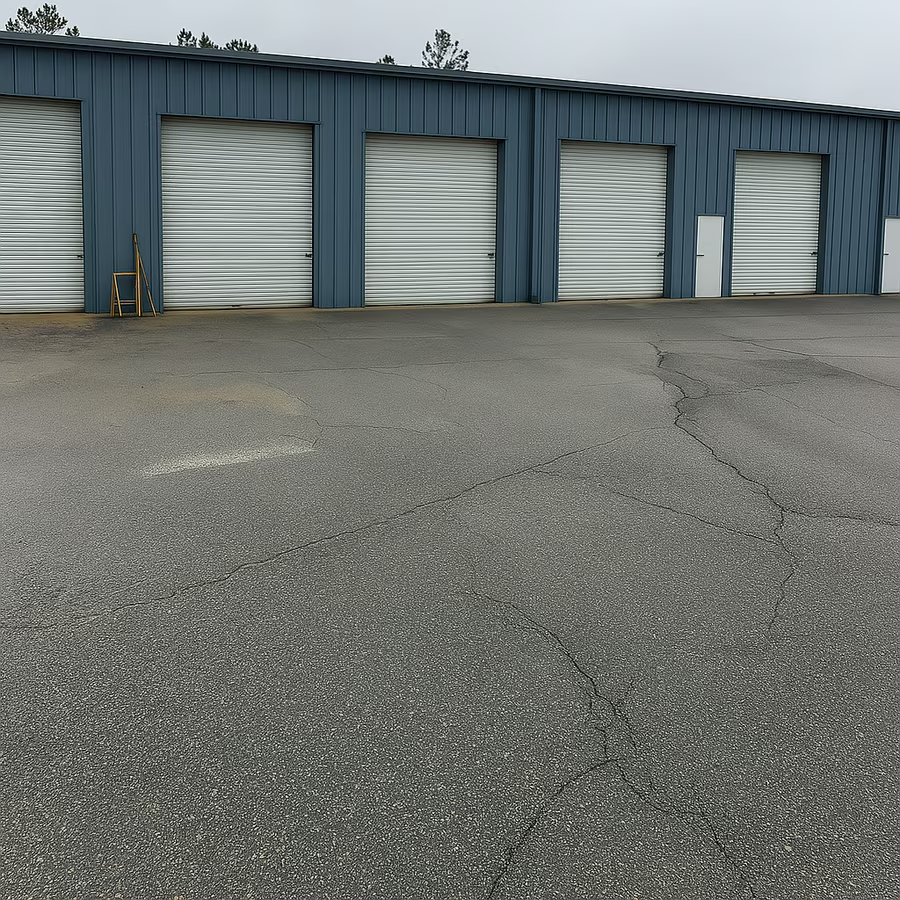
Parking and fleet movement are where the flex model earns its keep for this industry. Landscaping runs on trucks and trailers, and those assets need somewhere secure to sit overnight and somewhere workable to line up and load each morning. A dedicated base means the fleet is not scattered across driveways and public lots, exposed to theft and weather, but staged where the crew reports. The physical footprint of a flex unit — drive-up access, room to maneuver a truck-and-trailer combination, secure enclosure for what needs to be locked up — fits the daily rhythm of a grounds operation far better than a residential setup or a bare rented yard ever could.
The Professional Front That Wins Commercial Contracts
There is a ceiling that residential-based landscapers hit when they try to move upmarket, and it has less to do with the quality of their work than with how the operation looks and functions. Commercial grounds contracts — office parks, retail centers, HOAs, municipal work, property-management portfolios — go to vendors who read as established, insured, and permanent. A crew dispatched from a driveway can do excellent work, but the buyer on the other side of a maintenance contract is evaluating reliability and staying power, and a real commercial address quietly communicates both.
Flex space provides the professional front that supports this move. The finished office portion of a flex unit gives a landscaping business a genuine place to run the parts of the operation that are not swinging a string trimmer: preparing estimates, meeting a prospective commercial client, scheduling crews, handling invoicing and the back-office work that grows right alongside the field work. It is the difference between doing a walkthrough bid from a truck cab and inviting a property manager to sit down at an actual office to review a proposal. As the business adds office staff, an estimator, or a dispatcher, the space is already there to hold them.
Just as importantly, a commercial base changes how crews organize and present themselves. Trucks staged at a professional facility, equipment maintained in a real shop space, materials handled in an organized warehouse rather than a backyard — all of it signals to clients and to the crews themselves that this is a serious operation. That image is not vanity. In the competition for the contracts that make a landscaping business durable and profitable, looking the part is part of winning the part. Forward Business Park's flex model is designed to give operators across its markets exactly that kind of credible, contract-winning home base.
Built for the Season: Scale, Store, and Maintain Through the Year
Landscaping is a seasonal business, and the right facility respects that rhythm instead of fighting it. Peak season is a sprint — long days, full crews, maximum equipment and material moving through the operation. The off-season is a different job entirely: winterizing equipment, repairing and sharpening what took a beating, servicing the fleet, and in many markets pivoting to snow work or holiday installations. A base that only fits one of those modes forces awkward compromises the rest of the year.
Flex space is well suited to this cycle because it is genuinely multi-use. The same warehouse footprint that stages materials and loads trailers in July becomes a maintenance and repair bay in January, where crews can pull equipment apart, service mowers, rebuild irrigation setups, and get the fleet ready for spring without renting a separate shop or working outdoors in the cold. The office keeps running year-round — booking next season's contracts, planning routes, and handling the administrative work that never stops. One space carries the operation through every phase of the year rather than sitting half-empty for part of it.
Flexibility also means the base can grow with the business rather than boxing it in. A grounds operation that adds crews, expands its service area, or lands a large commercial account needs the option to take more space when the work justifies it. The advantage of an operator like Forward Business Park, with flex properties across nine states, is that this kind of right-sizing is possible within a single relationship — a company can start with the footprint it needs today and scale into more space as it grows, without the disruption of hunting for an entirely new facility every time it outgrows the old one.
Growing With Forward Business Park
The best home base for a landscaping business is one that adapts as fast as the business itself does. Forward Business Park is built around that principle. With flexible lease terms, operators can match their commitment to where they actually are — no overreaching on space before the contracts are signed, and no scrambling for room once they are. As crews, equipment, and materials grow, a business can right-size into a larger footprint over time rather than starting over somewhere new each time it expands.
A flex base also gives a grounds operation the professional image that wins and keeps commercial contracts: a real address, a genuine office for estimates and client meetings, and an organized, credible facility that signals staying power to the property managers and commercial clients who award the work worth having. Consolidating scattered storage, parking, and administration into one base is not just more convenient — it is how a landscaping company steps from being a local operator into being a serious commercial vendor.
With properties across Georgia, Texas, Ohio, Michigan, Illinois, New York, Missouri, Alabama, and Arkansas, Forward Business Park offers that kind of base in a growing number of markets, so a business can find the right space where it works today and stay within the same trusted relationship as it expands. If your landscaping or lawn-care operation has outgrown the driveway, the rented yard, and the cross-town storage run, it may be time for a base built for the way you actually work. Contact our leasing team or schedule a tour to see how a flex unit at Forward Business Park can become the home your business grows into.