Flex Space for Contractors and the Trades: The Ideal Home Base
Every successful trade business hits the same wall. The general contractor who started out of a home garage now has three trucks parked on the street and a wife tired of drywall in the driveway. The electrician renting two climate-controlled storage units across town spends an hour a day shuttling material between them and the job site. The HVAC company running estimates out of a truck cab keeps losing bigger commercial bids to competitors with a real address. These are good problems — they mean you're growing — but they're expensive ones. Scattered storage, no place to meet a client, and no room to stage a job all quietly cap how big your business can get. What you need is a single professional base of operations, and for a growing trades business, that base is flex space.
The Hidden Cost of Running From Everywhere Most trade businesses don't decide to operate out of three locations — they back into it. The garage fills up, so tools migrate to a storage unit. The storage unit fills up, so materials go to a second one, or into a rented yard across town, or into whatever corner of a job site the crew can commandeer. Each addition solves an immediate crunch, but the collection of half-measures carries a real cost that rarely shows up on any invoice.
That cost is measured in hours and fuel. Every morning a crew that has to stop at a storage unit before heading to the job is a crew that starts late. Every material run back to a home garage mid-day is a billable hour burned on driving. When your inventory, tools, and equipment live in different places, no one ever knows exactly what you have or where it is, and jobs get delayed while someone hunts for the right fittings or that specialized tool that was definitely in the other unit. Multiply that friction across a full crew and a full year, and the drag on the business is substantial — it just hides in plain sight because you've normalized it.
There's a softer cost too, and it's the one that keeps a trades business small. Without a real place of business, you're always improvising. You meet prospective clients at a coffee shop or in their driveway. You have nowhere to bring a supplier rep, nowhere to interview a new hire that feels like a company rather than a side hustle, nowhere to put a sign with your name on it. Consolidating into one base doesn't just save money — it changes what your business is capable of becoming.
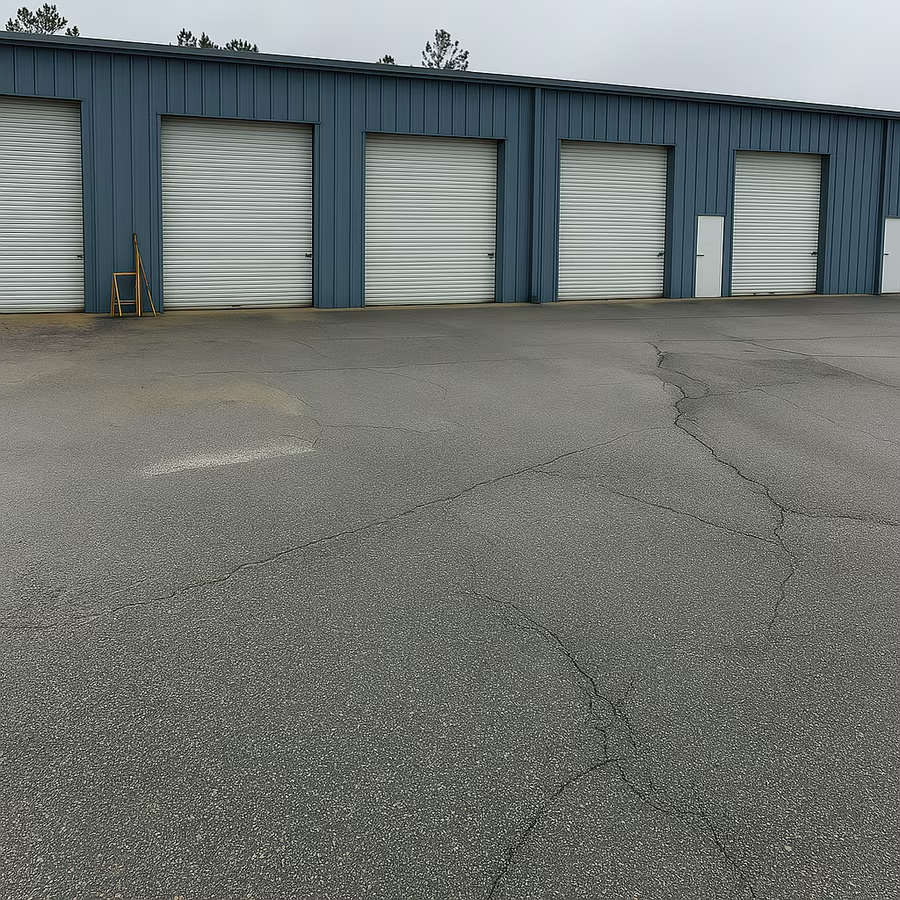
One Location That Does Everything a Trade Business Needs Flex space is built for exactly this problem. A single flex unit combines finished office space up front with open, high-clearance warehouse space in the back — which maps almost perfectly onto how a trades business actually operates. The front becomes your office and estimating area: a professional room where you can sit down with a homeowner to review a bid, walk a commercial client through a proposal, handle scheduling and invoicing, and store the paperwork and permits every job generates. The back becomes everything else your operation needs under one secure roof.
That warehouse space is where the real efficiency lives. It's secure, lockable storage for your tools and expensive equipment, so nothing sits exposed in a truck bed overnight or scattered across storage units you don't fully control. It's a place to buy materials in bulk and warehouse them, turning quantity discounts into real margin instead of paying retail run by run. Most importantly, it's room to stage. You can lay out and organize a job the night before, pre-load trucks in a covered bay instead of in the rain, and send crews out the door at first light already provisioned for the day. For trades that fabricate or prep — cutting and bending, building assemblies, prepping fixtures — the open floor doubles as a workshop where that work gets done efficiently and out of the weather.
The point is consolidation. Office, workshop, tool crib, material warehouse, and truck-loading yard all become one address instead of five. Your crew reports to one place, your inventory lives in one place, and your business finally operates from a base instead of from wherever it happened to end up.
The Professional Image That Wins Bigger Work The operational savings are real, but for many trades the bigger prize is the jobs a professional base unlocks. There is a hard ceiling on the work a business can win when it has no real address. Property managers, general contractors awarding subcontracts, commercial clients, and municipalities all vet their vendors, and a company that operates out of a home garage reads as a risk no matter how good the actual craftsmanship is. A dedicated commercial location signals permanence and scale — it tells a prospective client that you're an established operation that will still be around to honor the warranty, and that you can handle the volume a larger contract demands.
That signal changes which bids you're even invited to submit. A flex space gives you a business address for licensing, insurance, and bonding paperwork, a clean office to host a walkthrough or a preconstruction meeting, and a physical presence that makes the leap from residential side jobs to commercial contracts feel credible. When you're competing for a recurring maintenance contract with a property management company or a subcontract on a commercial build, looking like a real company is often the difference between the shortlist and the reject pile. The unit pays for itself not only in saved hours but in the class of work it makes possible.
Growing With Forward Business Park The final advantage of flex space is that it flexes. A trades business rarely grows in a straight line — you add a crew for a big season, you take on a new service line, you land a contract that doubles your material throughput. Flex space is designed to move with that. You can start with a unit sized for where you are today and take on more space as the crew and the equipment list grow, right-sizing your footprint to the business rather than signing a lease for space you're gambling you'll eventually fill. That flexibility means your overhead scales with your revenue instead of running ahead of it.
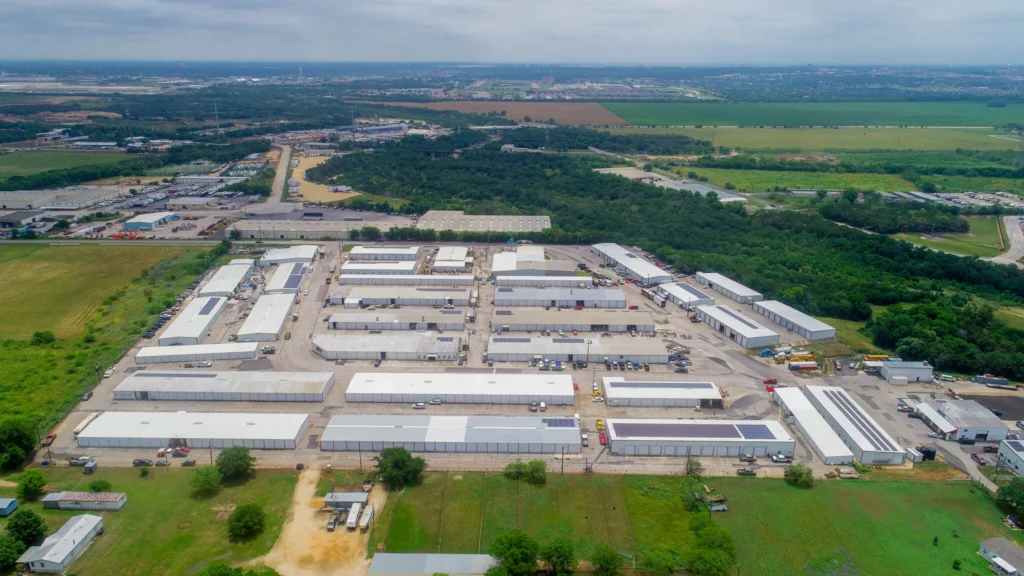
Forward Business Park specializes in exactly this kind of adaptable, professional flex space, and we lease it to small and mid-sized businesses across a wide footprint — Georgia, Texas, Missouri, Ohio, Michigan, Illinois, New York, Alabama, and Arkansas. Whether you're an electrician outgrowing the garage in the Atlanta metro, an HVAC company consolidating storage units in Texas, or a general contractor looking for a real base of operations in the Midwest, the model is the same: one professional home for your office, your equipment, your materials, and your crew, on lease terms built to grow with you. If your trade business has outgrown where it started, contact our leasing team to schedule a tour and see how the right base changes what you can build.